My First Honest Impression of Vietnam
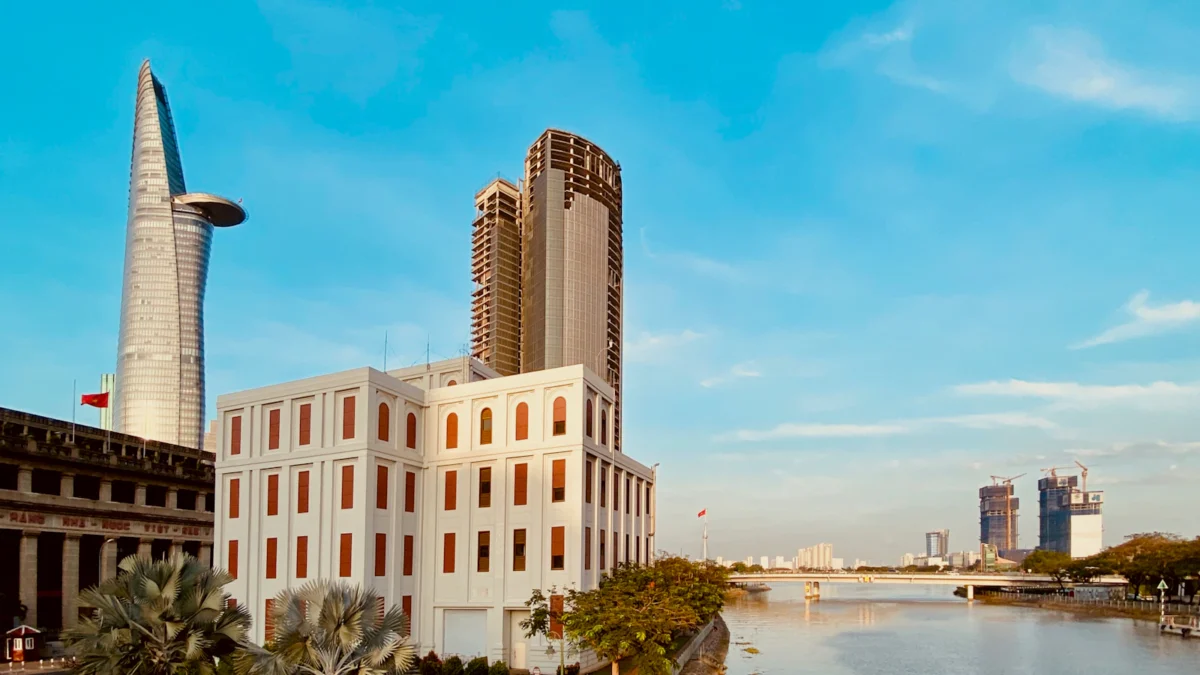
What many Americans notice quickly in Vietnam is how fast the country feels — and how much more layered it is than the typical “cheap Southeast Asia” framing suggests. From an American point of view, Vietnam is approximately 102.3 million people (per General Statistics Office 2025 reporting, following the 2024 mid-term population census recording 101,112,656), with GDP growing around 8.02% in 2025. The country welcomed roughly 21.17 million international visitors in 2025 — a record year. This is not a country in stagnation. It’s a country in genuine economic motion, building infrastructure, growing cities, opening to international workers, and reshaping its administrative structure (Vietnam officially shifted to a new provincial-level administrative system with 34 units, including 28 provinces and 6 centrally governed cities, in 2025).
The cost relief is real. Modern apartments, exceptional food, fast cheap internet, and developed café culture are accessible at prices that surprise Americans. Café work culture is among Asia’s best — particularly in Hanoi, Da Nang, and HCMC’s expat neighborhoods. The food deserves its reputation: phở, bún chả, bánh mì, mì Quảng, cao lầu, hủ tiếu, bún bò Huế — Vietnamese cuisine operates at world-class quality at prices that rarely exceed $3–$5 per meal at local restaurants.
But Vietnam is also genuinely more demanding than the cheap-paradise version suggests. The country does not currently have a dedicated digital nomad visa equivalent to Thailand’s DTV or Portugal’s D8. Americans rely on combinations of e-visas (good for up to 90 days, available to citizens of all countries and territories since August 15, 2023), business visas, work permit-tied visas (regulated by Decree 219/2025/ND-CP), or family-sponsored arrangements. Working remotely for non-Vietnamese clients on a tourist e-visa exists in a legal gray area. Hanoi has serious PM2.5 air quality issues, particularly in winter. Central Vietnam has typhoon and flooding risks. Vietnamese language barriers in deeper contexts are real. Healthcare for complex specialist care often means flights to Bangkok or Singapore from anywhere outside HCMC and Hanoi.
The adjustment for most Americans is realizing that “moving to Vietnam” is really “moving to a specific Vietnamese city,” and the differences between them are larger than visitors realize. Ho Chi Minh City is Vietnam’s commercial capital — fast, business-driven, hot year-round, with the strongest career market in the country. Hanoi is the political and cultural capital — slower, more atmospheric, with the country’s worst winter air quality. Da Nang is the coastal expat base — beach lifestyle, café work culture, calmer rhythm, smaller scale. Nha Trang, Hoi An, Da Lat, Phu Quoc — each is a different country in feel.
The honest first impression: Vietnam is one of the strongest Asia bases on the table for serious American movers — for the right profile, in the right city, with the right visa strategy. The country rewards Americans who plan carefully rather than Americans who only chase cheap living. Get the city, the visa, and the healthcare setup right, and Vietnam delivers a quality of life genuinely hard to replicate elsewhere. Get them wrong, and you’ll spend three years rotating between e-visas and great coffee wondering why the long-term plan never quite came together.
What Living in Vietnam Actually Feels Like for Americans
Daily life in Vietnam varies dramatically by city, but a few patterns hold across most of the country.
Daily convenience is structurally high in major cities. Grab and Be handle ride-hailing, food delivery, and package logistics. Shopee, Lazada, and Tiki cover e-commerce. Banking, SIM cards, condo amenities, and pharmacies all work efficiently. Fiber internet runs $8–$25/month for fast plans. Mobile 5G is widely available.
Food culture is one of Vietnam’s greatest national strengths and is structurally embedded in daily life. Regional cuisines are genuinely distinct — northern (Hanoi specialties like phở Hà Nội, bún chả, bún thang), central (Hue’s royal cuisine and Da Nang’s mì Quảng, bún chả cá), southern (HCMC’s diverse adapted cuisine including hủ tiếu, bánh xèo). Street food meals run 35,000–80,000 VND ($1.50–$3.50). Mid-tier local restaurants run 150,000–400,000 VND per person.
Café work culture is one of Vietnam’s strongest assets for Americans. Vietnam has built a deep coffee tradition (Vietnamese coffee culture is its own thing — drip-filtered cà phê sữa đá, egg coffee invented in Hanoi, salt coffee, coconut coffee), and the spread of laptop-friendly cafés is exceptional. In Hanoi’s Tây Hồ, HCMC’s District 1 and District 3, Da Nang’s An Thượng, and Hoi An — cafés function as both social hubs and work spaces in a way that’s better adapted to remote workers than most Asian countries.
Apartments and serviced apartments in Vietnam offer significantly better value than U.S. coastal cities. Modern one-bedroom apartments in expat neighborhoods rent for $400–$1,200/month depending on city and area. Serviced apartments with management, gym, and pool can run $700–$2,500+/month in premium HCMC or Hanoi locations.
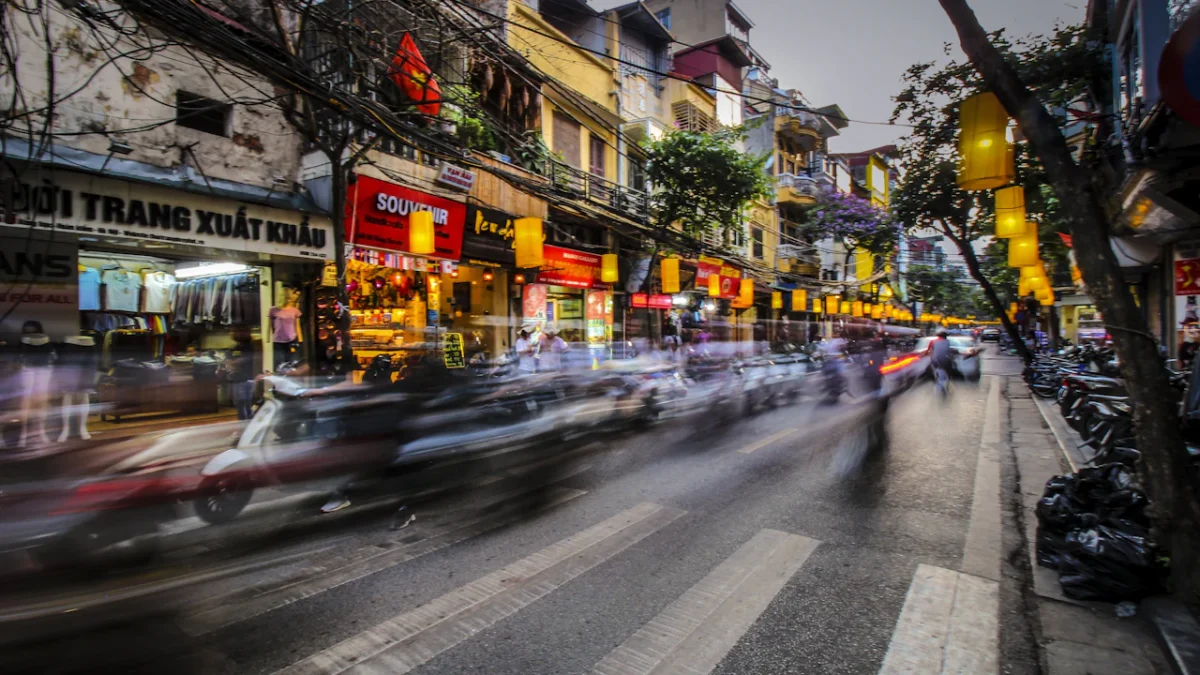
Motorbike-heavy streets define the daily texture of every major Vietnamese city. Vietnam has approximately 70+ million registered motorbikes for a population of 102 million — that’s the daily mobility infrastructure. Crossing streets, navigating sidewalks (often occupied by parked motorbikes and food vendors), and accepting motorbike-density noise are real adjustments for Americans coming from car-centric U.S. cities.
Ride-hailing and delivery apps (Grab, Be, Xanh SM, GrabFood, ShopeeFood) cover almost all transport and food logistics in major cities, at prices that surprise Americans (a 5km Grab car ride often runs $3–$5; a Grab Bike trip $1–$2).
City vs. beach vs. mountain lifestyle differs dramatically. HCMC and Hanoi run on big-city intensity. Da Nang and Nha Trang run on coastal rhythms. Hoi An runs on heritage-town slowness. Da Lat runs on mountain coolness and café culture. Phu Quoc runs on island time.
Weather differences by region matter more than newcomers realize:
- Northern Vietnam: Four distinct seasons. Hanoi’s winters (December–February) are cool, damp, and gray with serious air quality issues. Summers are hot and humid.
- Central Vietnam: Distinct dry season (January–July) and rainy/storm season (August–December) with real typhoon risk.
- Southern Vietnam: Hot and humid year-round (80s–90s°F). Distinct wet season (May–November, daily afternoon storms) and dry season (December–April).
- Mountain areas (Da Lat, Sapa): Cooler, more variable, often described as “eternal spring” in Da Lat.
Language adaptation is more demanding than in Thailand or Malaysia. English works in tourist zones, hotel chains, expat-focused cafés, international hospitals, and international business settings. It doesn’t work in many local restaurants, smaller shops, government offices, immigration interactions, and most non-expat-zone daily Vietnamese life. Even basic Vietnamese opens substantial doors.
Visa/admin reality is real. The e-visa works for short stays. Long-term living requires real planning — Vietnam doesn’t currently have a clean digital nomad visa pathway, and many Americans rotate e-visas with periodic border runs while operating in a legal gray area for remote work.
What feels freeing: the cost relief vs. the U.S.; the food and café culture; the urban energy in HCMC; the cultural depth in Hanoi; the beach lifestyle in Da Nang and coastal cities; the genuine regional variety; the friendliness of daily service interactions in many settings.
What feels draining: visa complexity, motorbike traffic density, air quality in Hanoi (and to a lesser extent HCMC during certain months), rainy season disruption in Central Vietnam, the language barrier in deeper contexts, slower administrative processes, and the lifestyle inflation that easy daily costs can hide.
The honest pattern: Vietnam rewards Americans who plan carefully rather than Americans who only chase cheap living. The cheapness only translates into a sustainable life if you make real decisions about city, visa, healthcare, and lifestyle.
Cost of Living in Vietnam for Americans
Vietnam can be dramatically cheaper than U.S. cities — meaningfully cheaper than even most Thailand options for similar lifestyle quality. Cost-of-living comparisons consistently show Vietnam below most U.S. cities, particularly excluding rent. That’s directional only; your actual cost depends heavily on city, housing, healthcare, schools, and lifestyle. Treat the ranges below as approximate.
Solo American remote worker budget
A solo American on a moderate lifestyle typically lands somewhere between $900 and $2,500 per month, depending heavily on city. Da Nang, Hoi An, Nha Trang, Da Lat, and smaller cities sit at the lower end. HCMC District 1/2/3 and Hanoi Tây Hồ push toward the upper end. Sub-$800/month is possible with strict discipline in Da Nang, Hoi An, or non-premium HCMC/Hanoi neighborhoods.
Couple budget
Couples sharing a one-bedroom or small two-bedroom typically run $1,400–$3,500 per month. Splitting fixed costs makes per-person math meaningfully better than solo living.
Family budget
A family with one or two children needing a real two- or three-bedroom apartment, private health insurance, occasional eating out, transport, and (the key variable) international school tuition typically lands in the $3,500–$10,000+ per month range. International school tuition can run $10,000–$30,000+/year per child — less than top-tier HCMC or Hanoi international schools in absolute terms but still substantial.
Teacher / education worker budget considerations
Many Americans in Vietnam teach English at language centers (Apollo, ILA, VUS, Wall Street English) or international schools. English teaching salaries typically run $1,200–$2,500/month at language centers, often with housing assistance. International school teacher packages run substantially higher with full housing and education benefits included.
Retiree budget considerations
Retirees on a comfortable lifestyle — moderate apartment or villa, private health insurance, local-and-Western dining mix, occasional travel — typically run $1,500–$3,500/month in Vietnam outside premium HCMC/Hanoi expat areas. Healthcare insurance is the largest variable: for Americans 65+, comprehensive international coverage with evacuation can run $5,000–$15,000+/year — particularly relevant in Vietnam given that complex specialist care often requires travel to HCMC, Hanoi, Bangkok, or Singapore. Plan healthcare before committing.
What usually costs more than Americans expect
- Premium serviced apartments in HCMC District 1 or Hanoi Tây Hồ: command real premiums.
- International school tuition: comparable to U.S. private schools.
- Imported groceries: Western brands at Annam Gourmet, K-Mart, or specialty importers — 2–4x local equivalents.
- Western restaurants in expat zones: meals can cost 5–10x equivalent local food.
- Private health insurance for older Americans: rises sharply with age.
- Trips to Bangkok or Singapore for specialist care: add up over time.
- Air purifiers and replacement filters in Hanoi: real ongoing cost.
- Visa runs and renewals: periodic e-visa cycles and border trips cost time and money.
Where Americans may save money compared with U.S. cities
- Vietnamese food at all levels: $1.50–$3.50 per meal at street and local restaurants.
- Coffee: $1–$3 at any café, including specialty roasters.
- Apartment rent: modern one-bedrooms in good areas at $400–$900.
- Grab and motorbike taxis: dramatically cheaper than U.S. ride-sharing.
- Domestic help: cleaners, laundry, basic cooking at fractions of U.S. cost.
- Healthcare at private hospitals: substantial discounts to U.S. pricing for primary care.
- Phone and internet: fiber + 5G mobile from $15–$30/month combined.
- Massage and wellness: from $10–$25/hour.
- Domestic and regional travel: Vietnam’s budget airlines (VietJet, Bamboo Airways) and the long coastline make travel within Vietnam and across Southeast Asia cheap.
Why city and lifestyle choice matter more than country averages
Two Americans on identical incomes in Vietnam can have completely different financial outcomes. One in Da Nang’s An Thượng on a moderate lifestyle saves 50% of their U.S. income. Another in HCMC’s District 1 with frequent Western dining and a serviced apartment saves nothing. The difference is rarely income — it’s city, area, housing, and food/social discipline. Vietnam makes lifestyle inflation easy in expat neighborhoods.
Best Places to Live in Vietnam for Americans
This is the section that matters most. Vietnam isn’t one move; it’s several plausible moves across genuinely different cities and climates, and the right one depends on what you actually want.
Ho Chi Minh City
Best for: Americans who want commercial energy, the strongest career market in Vietnam, startup and business culture, the deepest international community, the most developed coworking infrastructure, world-class restaurants and nightlife, and proximity to Mekong Delta and other regional destinations. Strong fit for remote workers in tech, design, marketing, finance, and Vietnam-facing business roles. Watch out for: Heat and humidity year-round; traffic that genuinely tests patience; air quality dips during certain months; high cost in expat districts compared to other Vietnamese cities; ongoing visa compliance; post-2025 administrative changes that have expanded HCMC’s official footprint.
Read our full guide to living in Ho Chi Minh City as an American.
Hanoi
Best for: Americans who want cultural depth, café culture as daily-life infrastructure, history and atmosphere, the political and cultural capital experience, established international school and NGO/embassy circles, and access to northern Vietnam (Sapa, Ha Long, Ninh Binh). Strong fit for writers, teachers, NGO professionals, and culture-driven movers. Watch out for: Serious winter PM2.5 air quality issues (Hanoi has repeatedly ranked among the world’s top-10 most polluted major cities during winter); cold damp winters that surprise Americans expecting “tropical Vietnam”; spring drizzle season; smaller-scale nightlife and international business than HCMC; the Northern Vietnamese accent and slightly more reserved culture.
Read our full guide to living in Hanoi as an American.
Da Nang
Best for: Americans who want beach access combined with café work culture, dramatic cost relief vs. U.S. coastal cities, calmer pace than HCMC or Hanoi, walkable expat neighborhood in An Thượng, and Central Vietnam hinterland access (Hoi An, Hue, Marble Mountains). Strong fit for remote workers, semi-retirees, and lifestyle expats. Watch out for: Rainy season and typhoon risk (August–December); limited public transport; smaller local job market; specialist healthcare often requires travel to HCMC, Hanoi, Bangkok, or Singapore; post-2025 administrative merger that expanded Da Nang to include former Quang Nam.
Read our full guide to living in Da Nang as an American.
Nha Trang
Best for: Americans who want beach-city living with more developed urban infrastructure than smaller coastal towns, sunshine, seafood, sea views, and a Russian/Korean/international tourism-shaped community. Coastal lifestyle without Phuket pricing. Watch out for: Smaller expat infrastructure for English speakers compared with Da Nang; tourism seasonality affects daily life and rent; limited specialist healthcare; smaller café-and-coworking community than Da Nang or HCMC; some areas heavily tourism-shaped.
Read our full guide to living in Nha Trang as an American.
Hoi An
Best for: Americans who want heritage atmosphere, slower lifestyle, lantern-lit Old Town charm, café culture, and nearby beaches (An Bang, Cua Dai). Strong fit for writers, semi-retirees, and lifestyle expats wanting smaller-scale Vietnamese life. Now within the broader post-merger administrative footprint of greater Da Nang. Watch out for: Real flooding risk during heavy rain (Hoi An’s Old Town is prone to seasonal flooding); intense tourism pressure on housing and pricing; limited big-city infrastructure; smaller specialist healthcare; 30–45 minutes from Da Nang for major hospitals and airport.
Read our full guide to living in Hoi An as an American.
Hue
Best for: Americans who want imperial Vietnamese history (the former Nguyen Dynasty capital), Buddhist culture, slower central Vietnam rhythm, lower cost than HCMC/Hanoi/Da Nang, and access to Da Nang and central Vietnam. Watch out for: Heavy rainy season (Hue is one of Vietnam’s rainiest cities); limited international community; smaller cafe and remote-worker infrastructure than Da Nang; specialist healthcare often requires travel to Da Nang or HCMC.
Read our full guide to living in Hue as an American.
Da Lat
Best for: Americans who want cooler year-round weather (Vietnamese highland climate, often called “eternal spring”), pine forests, café culture, slower mountain rhythm, and a break from Vietnam’s coastal heat. Strong fit for writers, semi-retirees, and Americans wanting genuinely cooler climate without leaving Southeast Asia. Watch out for: Cooler nights that can surprise Americans expecting tropical Vietnam; limited specialist healthcare; smaller English-speaking community; mountain location adds travel time to coastal beaches; smaller job market.
Read our full guide to living in Da Lat as an American.
Phu Quoc
Best for: Americans who want Vietnamese island life, beaches, sunshine, resort and villa lifestyle, and Gulf of Thailand access. Vietnam’s largest island, with a growing international tourism and digital nomad presence. Watch out for: Limited specialist healthcare; transport friction (island logistics, ferry dependence for some areas); rainy season and storm risk; tourism-driven cost pressures; visa-on-arrival exemption changes in recent years — verify current rules.
Read our full guide to living in Phu Quoc as an American.
Can Tho
Best for: Americans who want lower-cost Mekong Delta city living, river culture, southern Vietnamese rhythm, local food specialties, and a meaningfully cheaper alternative to HCMC. Watch out for: Limited international community; less English-speaking infrastructure; smaller international school options; specialist healthcare often requires travel to HCMC; less developed café and coworking scene than HCMC, Hanoi, or Da Nang.
Read our full guide to living in Can Tho as an American.
Quy Nhon
Best for: Americans who want a quieter coastal city in central-southern Vietnam, beaches, lower-cost potential, and less intense tourism than Da Nang or Nha Trang. A genuinely off-the-beaten-path option. Watch out for: Much smaller expat infrastructure; limited international healthcare options; smaller café and coworking scene; less English-speaking daily life; limited international flight connectivity.
Read our full guide to living in Quy Nhon as an American.
Vietnam by Lifestyle Type
Best for remote workers
Da Nang for beach lifestyle plus café work culture and cost relief. Ho Chi Minh City for infrastructure, coworking density, and international community. Hanoi for café culture and cultural depth. Nha Trang, Hoi An, Phu Quoc for lifestyle-focused remote workers willing to accept smaller infrastructure. The visa picture applies equally across cities — Vietnam doesn’t have a dedicated nomad visa, so most rely on e-visa cycles or other arrangements.
Best for teachers and education workers
Ho Chi Minh City and Hanoi have the deepest international school markets and the highest English teaching demand. Da Nang has a growing but smaller market. International school teachers typically have sponsored work permits and employer-managed visas — the cleanest legal pathway for long-term work in Vietnam. Work permits under Decree 219/2025/ND-CP are required for any work for Vietnamese employers — verify carefully.
Best for families
Ho Chi Minh City for international school depth and healthcare. Hanoi for cultural depth and established international community (with air quality as the real concern). Da Nang for beach lifestyle and growing international school presence. Cost is the main constraint at international school level.
Best for retirees
Da Nang, Nha Trang, Hoi An, Da Lat, and Phu Quoc offer the most retiree-friendly combinations of cost, climate, and lifestyle. Verify visa pathways for retirees carefully — Vietnam doesn’t have a dedicated retirement visa equivalent to Thailand’s, so retirees typically rely on family-sponsored visas, investment-tied arrangements, or e-visa cycles. Healthcare insurance and emergency evacuation coverage matter substantially for older Americans living in smaller cities. Not legal advice — verify current options.
Best for saving money
Da Nang, Da Lat, Hoi An (away from the Old Town tourist core), Can Tho, Quy Nhon, and outer neighborhoods in HCMC and Hanoi offer meaningful cost relief. Caveat: lifestyle inflation in expat-heavy areas (HCMC District 1, Hanoi Tây Hồ, Da Nang An Thượng) can erase savings if you’re not paying attention.
Best for social life and dating
Ho Chi Minh City leads for sheer scale, scene density, and pool size. Hanoi for café and cultural communities. Da Nang for active expat community at smaller scale. Phu Quoc has its own contained scene. The smaller the city, the more tourist-vs-resident dynamics shape dating.
Best for beach lifestyle
Da Nang for beach + city infrastructure. Nha Trang for established beach-city living. Phu Quoc for genuine island life. Hoi An / An Bang for heritage-and-beach combo. Quy Nhon for off-the-beaten-path coastal life. Vung Tau for HCMC weekend-beach access.
Best for a quieter lifestyle
Da Lat for mountain cool. Hue for heritage calm. Hoi An for heritage-town slowness. Can Tho for Mekong rhythm. Quy Nhon for quiet coastal life.
Housing Reality in Vietnam
Housing in Vietnam varies dramatically by city, and country averages don’t tell the story.
Ho Chi Minh City has the country’s most developed apartment market — modern condos in Districts 1, 2 (now Thu Duc City), 3, and 7 range from $500 to $2,500+/month for one-bedrooms depending on building and area. Hanoi offers similar quality at slightly lower prices, with Tây Hồ and Ba Đình as the main expat-focused areas. Da Nang offers excellent value — modern one-bedrooms in An Thượng / Mỹ An at $500–$1,200/month. Nha Trang, Hoi An, Phu Quoc have beach-area premiums but generally cheaper inventory.
Local apartments (typically Vietnamese-language management, less Western-friendly amenities) rent dramatically lower than serviced apartments — often $250–$600/month for solid one-bedrooms in non-premium areas.
Villas and houses are more common in suburban/family areas like Thu Duc (HCMC), Ciputra (Hanoi), and inland Da Nang neighborhoods.
Furnished apartments are the default for foreigners. Most rentals come with bed, sofa, dining set, kitchen appliances, washing machine, and AC units in every room.
Lease terms typically involve 6–12 month contracts with 1–2 months security deposit plus 1 month advance rent. Verify all paperwork is properly documented — informal rentals can create immigration registration issues.
Building management quality varies widely. Newer construction (post-2018) by reputable developers (Vingroup’s Vinhomes, Novaland, Phú Mỹ Hưng, others) generally maintains higher standards. Older buildings can have plumbing issues, ventilation problems, and elevator reliability concerns.
Humidity, mold, noise, and construction matter more than newcomers expect. Vietnam’s humidity is real. Older or poorly ventilated apartments can develop mold during rainy seasons. Construction noise is constant in growing cities. Walk apartments and streets at multiple times before signing.
Rainy-season and flood-prone area considerations matter in Hoi An (Old Town flooding), parts of HCMC (some District 4 and District 8 streets), parts of central Hanoi, and lower-elevation coastal areas. Ask about flooding history before signing leases.
The most common American mistake is choosing housing based on photos and price rather than on practical conditions across seasons.
Remote Work, Internet, and Everyday Convenience
For American freelancers, consultants, and remote workers, Vietnam offers a compelling combination — if you have the right legal status.
Vietnam doesn’t have a clean digital nomad visa pathway. This is the single most important fact about long-term remote work here. The e-visa (valid for up to 90 days, single or multiple entry, available to citizens of all countries and territories since August 15, 2023) works for short and exploratory stays. For longer stays, Americans typically rely on combinations of:
- E-visa cycles with periodic border runs to renew (legal gray area for remote work)
- Business visas (DN) sponsored by Vietnamese companies
- Work permit + LD visa for Americans legally employed by Vietnamese entities (regulated by Decree 219/2025/ND-CP)
- Investor visas (DT) for Americans investing in Vietnamese businesses
- Family-sponsored visas for those with Vietnamese family ties
Working for Vietnamese employers or providing services to Vietnamese customers requires proper work permits. Working remotely for non-Vietnamese clients on a tourist e-visa exists in a legal gray area — many do it, but the legal framework isn’t specifically designed for it. Verify your specific situation with Vietnam Immigration, a qualified immigration attorney, or your employer’s legal counsel. This is not legal advice.
If you have the right legal status, the day-to-day mechanics are excellent. Fiber internet (Viettel, FPT, VNPT) at 100–500 Mbps runs $8–$25/month. Mobile 5G is widely available and cheap.
Café work culture is one of Vietnam’s strongest assets — among Asia’s best for laptop work. Particularly strong in Hanoi’s Tây Hồ, HCMC’s District 1/3, Da Nang’s An Thượng, and Hoi An.
Coworking is mature in HCMC (Dreamplex, Toong, CirCO, WeWork) and Hanoi (Toong, Up Co-Working, CirCO), present and growing in Da Nang (Enouvo Space, Hub Coworking, DNC Workspace), more limited elsewhere. Day passes $5–$15; monthly memberships $80–$250 depending on city and tier.
Time zone tradeoffs are real. Vietnam runs UTC+7 — 12 hours ahead of New York (11 during U.S. daylight saving), 15 hours ahead of San Francisco. East Coast clients map onto Vietnamese evenings; West Coast clients mean late-night calls.
Daily errands work efficiently. Grab, ShopeeFood, GrabFood handle delivery. Shopee, Lazada, Tiki cover e-commerce. The friction is concentrated in banking (varies by bank and visa status) and Vietnamese-language interactions outside expat zones.
Healthcare and Everyday Services
Vietnam’s healthcare quality varies sharply by city — a critical factor in city selection.
Major private hospitals in Ho Chi Minh City (FV Hospital, Vinmec Central Park, Hanh Phuc International Hospital, Columbia Asia, Family Medical Practice) and Hanoi (Vinmec Times City, Hanoi French Hospital, Family Medical Practice, Raffles Medical Hanoi) provide care that compares reasonably to U.S. private hospitals at substantial discounts. English-speaking specialists are findable.
Da Nang has solid private hospitals (Vinmec Da Nang, Family Medical Practice Da Nang, Hoan My Da Nang) for primary care and basic procedures, but specialist depth is more limited.
Smaller cities (Nha Trang, Hoi An, Hue, Da Lat, Phu Quoc, Quy Nhon, Can Tho) have more limited specialist coverage. Complex care typically requires travel to HCMC, Hanoi, Bangkok, or Singapore.
Insurance planning is essential. Most American long-term residents use one of three options:
- Local Vietnamese private insurance (Bao Viet, Liberty, Pacific Cross Vietnam): $400–$2,000+/year depending on age and coverage.
- International expat insurance (Cigna Global, Allianz Worldwide, IMG, William Russell): $1,500–$10,000+/year depending on age and coverage geography.
- Hybrid approaches with evacuation coverage — particularly important for Americans in smaller cities.
Insurance rates rise sharply with age, and pre-existing conditions affect pricing and coverage.
Public healthcare is generally not where international residents go — local public hospitals are crowded, language barriers are real, and the experience is significantly different from private international hospitals.
Pharmacies are widely available and convenient. Many medications that require prescriptions in the U.S. are available over the counter at lower prices, but follow Vietnamese law and consult professionals for anything serious.
This is general information only, not legal or medical advice. Verify your specific situation with licensed insurance brokers and the U.S. Embassy in Vietnam.
Getting Around Vietnam Without a Car
Mobility varies dramatically across Vietnam — and this surprises Americans expecting uniform Asian capital infrastructure.
Motorbike-heavy cities is the structural reality everywhere. Vietnam has approximately 70+ million registered motorbikes, and they’re the primary mobility infrastructure in every Vietnamese city.
Ho Chi Minh City has its long-awaited Metro Line 1 (operational since late 2024 connecting Ben Thanh to Suoi Tien) plus an extensive bus network and ride-hailing density. Hanoi has two operational metro lines (Line 2A Cat Linh – Ha Dong, Line 3 Nhon – Hanoi Station) plus extensive buses. Other cities have limited or no rail transit.
Grab, Be, and Xanh SM are the standard ride-hailing apps, working well in major cities. Grab car for longer distances; Grab Bike (motorbike taxi) for faster trips through traffic.
Traditional taxis (Mai Linh, Vinasun in the south; multiple companies in the north) are reliable but use apps for transparent pricing.
Renting or owning motorbikes is what many long-term residents do. Monthly rentals run $40–$120 for basic scooters; ownership is cheap. Vietnamese law requires a Vietnamese license for engines over 50cc — an International Driving Permit alone isn’t sufficient long-term. Riding without proper licensing voids insurance and creates serious liability after accidents. Vietnam’s road accident rates are among the higher in Southeast Asia. Wear a proper helmet, don’t ride drunk or in heavy rain.
Domestic flights are cheap and essential — VietJet, Bamboo Airways, Vietnam Airlines connect HCMC, Hanoi, Da Nang, Nha Trang, Phu Quoc, Hai Phong, Hue, and other cities at prices Americans find remarkable ($30–$120 for most domestic routes).
Trains connect Hanoi to HCMC along the famous Reunification Express (38+ hours, scenic), plus regional connections. Useful for slow-travel; flights are cheaper and faster.
Walking is limited by sidewalks (often occupied by motorbikes and food stalls), heat, humidity, rain, and traffic. Walking-based daily life works in compact areas (Hoi An Old Town, HCMC District 1 around walking-friendly streets, Hanoi Hoan Kiem during pedestrian-zone weekends) but doesn’t work as default mobility.
Weather, Rainy Season, Air Quality, and Regional Climate Differences
Vietnam does not have one climate. This is critical for Americans choosing a city.
- Northern Vietnam (Hanoi, Hai Phong, Sapa region): Four distinct seasons. Hot humid summers (June–August, 90s°F+, monsoon rain), cool damp winters (December–February, 50s–60s°F daytime, sometimes lower). Spring drizzle season (February–April). Pleasant autumns (September–November). Hanoi has serious PM2.5 air quality issues, particularly in winter — the city’s 2024 annual PM2.5 average was about 9 times the WHO annual guideline, with winter episodes pushing far higher. Americans with respiratory sensitivities should plan carefully.
- Central Vietnam (Da Nang, Hue, Hoi An, Quy Nhon, Nha Trang): Tropical with distinct dry season (January–July) and rainy/storm season (August–December). Real typhoon and flooding risk during storm season. Reuters reported Da Nang International Airport closed in preparation for Typhoon Bualoi in 2025. Da Nang and Hoi An can experience flooding in low-lying areas during heavy rain.
- Southern Vietnam (Ho Chi Minh City, Phu Quoc, Can Tho, Mekong Delta): Hot and humid year-round (80s–90s°F). Distinct wet season (May–November, daily afternoon thunderstorms) and dry season (December–April). No real cool season — the entire year is summer by U.S. standards.
- Mountain areas (Da Lat, Sapa, Buon Ma Thuot): Cooler year-round, with Da Lat famously offering “eternal spring” temperatures and Sapa having genuinely cool to cold winters.
Air quality varies by city and season:
- Hanoi: serious winter PM2.5 issues, repeatedly ranked among the world’s top-10 most polluted major cities during winter episodes (December–March).
- Ho Chi Minh City: notable but generally less severe air quality issues than Hanoi.
- Da Nang, coastal cities, mountain areas: significantly better air quality than Hanoi during most of the year.
- Burning season affects some northern and mountain areas during certain months.
The honest weather verdict: don’t pick a Vietnamese city without thinking about climate compatibility. A Seattle native who hates humidity might struggle in HCMC year-round. A Phoenix native used to dry heat might find Hanoi summer humidity oppressive. A respiratory-sensitive American should think very carefully about Hanoi.
Food, Coffee, Social Life, Dating, and Nightlife
Vietnamese food culture is one of Vietnam’s most consistent national strengths. Regional cuisines are genuinely distinct — northern (Hanoi specialties like phở Hà Nội, bún chả, bún thang, chả cá Lã Vọng), central (Hue’s royal cuisine, Da Nang’s mì Quảng, bún chả cá, cao lầu, bánh tráng cuốn thịt heo), southern (HCMC’s diverse adapted cuisine including hủ tiếu, bánh xèo, bún mắm). Street food meals run 35,000–80,000 VND ($1.50–$3.50); mid-tier local restaurants run 150,000–400,000 VND per person.
Coffee culture is one of Vietnam’s greatest assets for Americans. Vietnam is the world’s second-largest coffee producer, and the local coffee tradition runs deep. Egg coffee (cà phê trứng) was invented in Hanoi. Salt coffee (cà phê muối) emerged from central Vietnam. Coconut coffee from southern Vietnam. The specialty coffee scene has matured rapidly — Hanoi, HCMC, Da Nang, and Hoi An all have third-wave coffee roasters and laptop-friendly cafés that rival anything in major U.S. cities.
Social life for Americans varies sharply by city. Ho Chi Minh City has the largest, most active expat community with the deepest nightlife and restaurant scene. Hanoi has a real community anchored by teachers, NGO workers, and longer-term remote workers, smaller but more culturally engaged. Da Nang has a vibrant beach-and-café expat community concentrated in An Thượng. Smaller cities have proportionally smaller communities.
Nightlife is most developed in HCMC (Bui Vien backpacker street, District 2’s polished bar scene, sky bars across the city). Hanoi has its café-and-bia-hơi culture, plus an Old Quarter tourist nightlife strip and a more polished Tây Hồ scene. Da Nang’s nightlife centers on An Thượng with beach bars during dry season.
Dating from an American perspective: standard apps (Tinder, Bumble, Hinge) are active in HCMC, Hanoi, and Da Nang. Vietnamese cultural codes around family centrality, respect for elders, and indirect communication matter — Americans who arrive with U.S.-style directness sometimes land badly. Northern Vietnamese culture (Hanoi) is generally more reserved than southern (HCMC). The tourist-vs-resident dynamic affects app matches in tourism-shaped areas. Beyond that, this is mature territory — clear communication, respect, consent, and cultural awareness matter the same as anywhere.
Language and Cultural Adjustment
Vietnamese matters more in Vietnam than English-speaking Americans typically expect from the outside.
English works in: tourist zones, international business circles, international schools, international hospitals, major hotel chains, expat-focused cafés and restaurants, and the international remote-worker community.
English does not work well in: many local restaurants, smaller shops, government offices (immigration, residence registration, work permit processes), local hospitals and pharmacies, neighborhood services, repair shops, banks (varies by branch), and much of daily Vietnamese life. Even basic Vietnamese opens substantial doors.
Vietnamese tones are the main practical challenge — Vietnamese is tonal, and meaning shifts based on the tone (rising, falling, broken, etc.). Getting tones approximately right is essential for being understood.
Regional accents are genuine. Northern Vietnamese (Hanoi) is the version closest to literary standard and is what most language schools teach. Southern Vietnamese (HCMC) has different pronunciation patterns and some vocabulary differences. Central Vietnamese (Da Nang, Hue) has its own famously distinct accent.
Cultural codes that surprise Americans:
- Family centrality: deeply family-oriented society; ages, hierarchy, and obligations matter.
- Saving face: avoid public confrontation; indirect communication is the norm.
- Respect for elders: age and seniority structure interactions; the anh/chị/cô/chú/bác address system matters.
- Local rituals: Lunar New Year (Tết) is the major national holiday — the country largely shuts down for a week, and respect for the holiday matters socially.
Learning Vietnamese to a functional A2-B1 level over the first year is one of the best investments an American can make in long-term Vietnamese life.
Visa, E-Visa, and Work Permit Basics for Americans
This section is general information only. Vietnamese immigration law is specific, fact-dependent, and changes regularly. Verify with Vietnam Immigration, the Vietnamese Embassy in Washington D.C., or a qualified immigration attorney. This is not legal advice.
U.S. passport holders have several options:
- Vietnam E-Visa: Available to citizens of all countries and territories since August 15, 2023. Valid for up to 90 days, single or multiple entry. Applied through Vietnam’s official e-visa portal. Suitable for tourism and exploratory stays. Working for Vietnamese employers or providing services to Vietnamese customers on an e-visa is not permitted.
- Business Visa (DN): Sponsored by a Vietnamese company, used for business meetings, exploration, and pre-employment activities.
- Work Permit + LD Visa: For Americans legally employed by Vietnamese entities. Work permits are regulated under Decree 219/2025/ND-CP, which governs foreign workers, permits, renewals, revocations, and exemptions. Requires employer sponsorship, qualification documentation, health certification, criminal background check, and ongoing compliance.
- Investor Visa (DT): For Americans investing in Vietnamese businesses meeting specific thresholds.
- Student Visa (DH): For those enrolled in recognized Vietnamese programs.
- Family Sponsored Visas: For Americans with Vietnamese family ties.
Vietnam does not currently have a simple, dedicated digital nomad visa equivalent to Thailand’s DTV or Portugal’s D8. This is the most important fact for Americans considering long-term remote work in Vietnam. Many Americans rotate e-visas (legal gray area for remote work); others find compliant structures through formal employment or business arrangements. Verify your specific situation carefully.
Working in Vietnam without proper permits exposes you to fines, deportation, and possible blacklisting from future entry. Teachers, employees, consultants, founders, and NGO workers should verify legal work status before assuming compliance.
Becoming a Vietnamese tax resident generally requires more than 183 days in Vietnam in a 12-month period or having a permanent residential location. The U.S. taxes citizens worldwide. Vietnam-U.S. tax interactions are not covered by a comprehensive double-taxation treaty — talk to a cross-border tax specialist familiar with U.S.-Vietnam situations before you move.
Pros and Cons of Living in Vietnam as an American
What works really well
- Cost relief vs. U.S. cities — among the strongest in Asia.
- Food and café culture at every price level, structurally embedded in daily life.
- Fast-growing urban energy: Vietnam’s economy grew ~8.02% in 2025, and the country welcomed ~21.17 million international visitors in 2025.
- Regional variety: HCMC business, Hanoi culture, Da Nang beach, mountain options, island life.
- Remote-work potential for those with stable external income and proper legal planning.
- Strong domestic travel options: cheap budget flights, the Reunification Express train, regional buses.
- Friendly daily service culture in many settings.
- Growing international infrastructure in major cities.
- Strong fit for Americans wanting Southeast Asia without the cost of Singapore or scale of Bangkok.
- Coffee culture as among Asia’s best for café-based remote work.
What can wear you down over time
- Visa/work permit uncertainty: no clean digital nomad pathway.
- Vietnamese language barrier in deeper contexts.
- Traffic and motorbike density in all cities.
- Air pollution in Hanoi (especially winter) and to a lesser extent HCMC.
- Rainy season, storms, and flooding in Central Vietnam and parts of HCMC.
- Healthcare planning: specialist care from smaller cities means travel.
- Limited public transport in most cities outside HCMC and Hanoi’s partial metro coverage.
- Noise and construction in growing cities.
- Bureaucracy: slower administrative processes than in Singapore or KL.
- International school cost comparable to U.S. private schools.
- Difficulty integrating beyond expat circles without functional Vietnamese.
- Lifestyle inflation in expat-heavy neighborhoods.
Who Vietnam Is Best For
Vietnam suits a specific kind of American mover: the remote worker with stable U.S. income, SEO/marketing/product/design/dev/e-commerce/consulting professional; the teacher with international school or English center employment and legal work status; the freelancer or consultant willing to navigate visa cycles; the digital nomad doing extended stays with realistic planning; the food and coffee lover; the semi-retiree with passive income and healthcare planning; the family with international school budget; the American wanting Southeast Asia access without Singapore cost or Bangkok scale. The common thread: stable income that doesn’t require daily synchronous U.S. business hours, comfort with managing visa cycles, willingness to learn Vietnamese, and acceptance that Vietnam rewards careful planning over impulsive moves.
Who May Struggle in Vietnam
Vietnam will frustrate Americans who need clean air year-round (particularly affecting Hanoi), who need walkable orderly quiet streets, who dislike motorbike traffic, who expect English to work everywhere in deeper contexts, who need simple long-term visa certainty without ongoing planning, who have school-age children but haven’t budgeted for international schools, who require advanced specialist healthcare nearby in smaller cities, who want high local salaries without local-market adaptation, or who require fully synchronous U.S. working hours every day. It’s also a hard fit for Americans hoping for a frictionless visa pathway like Thailand’s DTV or Portugal’s D8 — Vietnam doesn’t offer that.
Vietnam vs Other Countries Americans Consider
Vietnam vs Thailand
Thailand has a clearer visa pathway (the DTV, operational since July 2024), more developed private healthcare with better specialist depth, stronger international community in absolute scale, and more polished urban infrastructure in Bangkok. Vietnam is meaningfully cheaper in many categories, has arguably stronger café culture, faster-growing economic energy, more compact daily distances in cities like Da Nang, and lower lifestyle inflation pressure. For Americans optimizing visa clarity and infrastructure depth, Thailand. For Americans optimizing cost and food/café culture, Vietnam.
Vietnam vs Malaysia
Malaysia is dramatically more English-friendly (structurally bilingual), with strong infrastructure, modern condos in KL and Penang, and the MM2H visa pathway for long-term stays. Vietnam is meaningfully cheaper, has deeper food culture specificity, and more developed café-based remote-work infrastructure. For Americans optimizing English access and infrastructure, Malaysia. For Americans optimizing cost and food culture, Vietnam.
Vietnam vs Bali / Indonesia
Bali has a more famous digital nomad scene, established wellness/spiritual identity, and the concentrated Canggu-Ubud community — but Indonesian visa logistics are complex, traffic in Bali is genuinely worse than most Vietnamese cities, and infrastructure varies. Vietnam has cleaner urban infrastructure in major cities, better café and food culture, more developed private healthcare in HCMC and Hanoi — but a less clear long-term visa pathway than even Indonesia’s developing options. For Americans optimizing nomad scene brand, Bali. For Americans optimizing cost and infrastructure depth, Vietnam.
Vietnam vs Portugal
Portugal has dramatically cooler Mediterranean climate, EU access, walkable European urbanism, Portugal’s D8 visa, and Schengen mobility. Vietnam has dramatically lower cost in absolute terms, better food culture, faster-growing energy, and Southeast Asia regional access. Time zones differ sharply — Portugal overlaps with U.S. East Coast afternoons; Vietnam requires evening work for U.S. clients. For Americans optimizing climate, EU access, and lighter time-zone friction, Portugal. For Americans optimizing cost and Asia base, Vietnam.
Vietnam vs Mexico or Costa Rica
Different category entirely. Mexico and Costa Rica offer much closer proximity to the U.S., better time zones for American clients, easier travel back home, and (for many) easier visa pathways. Vietnam offers Asia base, broader Southeast Asia access, generally lower cost, and dramatically different cultural texture. Vietnam wins for Americans wanting a real Asia base; Mexico and Costa Rica win for Americans wanting geographic and time-zone proximity to the U.S. while still getting a meaningful lifestyle change.
Final Verdict
For Americans seriously considering moving abroad, Vietnam is one of the most underrated options on the table — and one of the most demanding in terms of administrative planning. The combination of dramatic cost relief vs. the U.S., exceptional food and café culture, fast-growing urban energy, genuine regional variety (from HCMC’s commercial intensity to Hanoi’s cultural depth to Da Nang’s beach lifestyle to Da Lat’s mountain calm), and a real international community in major cities makes Vietnam a serious long-term base for the right American. The honest tradeoffs — Vietnam’s lack of a clean digital nomad visa pathway, Vietnamese language complexity, traffic and motorbike density, Hanoi’s winter air quality, Central Vietnam’s storm season, and the friction of cross-border tax planning without a comprehensive U.S.-Vietnam treaty — are real, and they filter out Americans hoping for a frictionless escape.
Vietnam can feel easy at first because daily costs and comfort are accessible, but long-term life still requires planning. The country rewards careful decisions about city, visa, healthcare, and lifestyle discipline. It punishes Americans who arrive expecting cheap paradise to take care of itself.
If Vietnam feels like the right country, the real decision becomes city choice. Start with Ho Chi Minh City if you want business energy, career networks, and the deepest international community; Hanoi if you want culture and capital-city depth (and can manage winter air quality); Da Nang if you want a coastal remote-work base with café culture and walkable lifestyle; Nha Trang or Phu Quoc if beach life matters most; Hoi An if heritage atmosphere is your priority; Da Lat if climate and slower mountain living are your priority. Each of these is a different country in feel — start with the city-level guides linked above, and decide based on the kind of American life you actually want to live.
FAQs
Is Vietnam good for Americans
For the right American profile — remote workers with stable income, teachers with legal work status, freelancers, semi-retirees with healthcare planning, food and culture lovers — yes. Vietnam rewards careful planning. It frustrates Americans looking for effortless cheap living without administrative planning.
Is Vietnam good for American expats?
Yes, particularly in HCMC, Hanoi, and Da Nang, which have the largest and most active international communities. Smaller cities have more contained communities — better for Americans willing to integrate, harder for those wanting expat bubbles.